
We acknowledge that we have a moral and social responsibility to make Wales, the UK, and the world a better place for current and future generations. Therefore, we are invested into looking at how we can be more sustainable as a school.
We have already taken positive steps to improve our school environment and the world around us. Since September 2019 we have:

We are very proud of these achievements, and we are always looking to find new ways to continue to improve our environment. Here are our goals for the next year to make Kings Monkton and our community more sustainable:
When we work as a team, we can accomplish great things, and the entire KMS Family, including pupils and staff, are dedicated to helping where they can and in areas that they are passionate about.
One way we are encouraging our pupils to think more sustainably is through our Eco-Group. The Eco-Group is made up of staff, primary, and secondary pupils and they meet fortnightly to discuss current measures and to put ideas forward about what can be done around the school to further improve our sustainability. Giving our pupils a voice to implement change has led to many fantastic ideas which are now a part of our school. Previously, Beth proposed a herb wall to use in school meals, Mrs. Priestly suggested getting an indoor plant into every classroom, Thalia suggested bug boxes and bird feeders, and Hassan said we should continue our good work of reducing our paper waste.
Annually our Eco-Group members will review eight important topics under the Eco-School’s programme, including: waste, litter, transport, global citizenship, healthy living, school grounds, energy, and water. They will decide which areas to focus on and create an action plan of change, this is good for the environment, but also good for those pupils involved as they learn leadership, debate and co-operation skills.


In June 2022, we introduced two honeybee hives onto our primary school roof as we know how important pollinators are and want to encourage them in our environment.
During spring and summer, our bees can be seen foraging in our city garden and in the local area, and helping flowers and other plants to bloom and grow. From summer 2023, we hope to ethically harvest excess honey from the hives and use it in our school canteen.
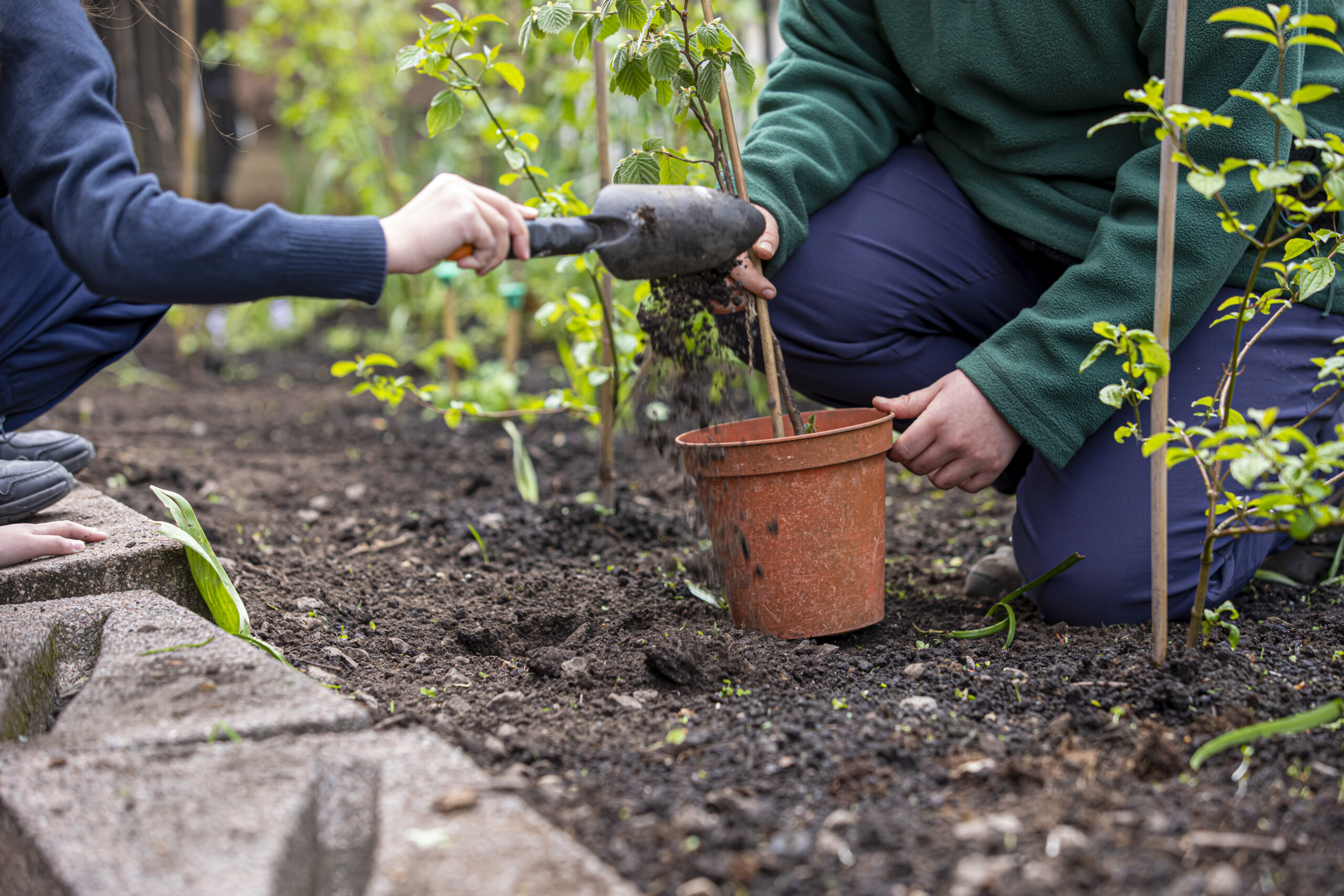
You do not have to have a green thumb to start a garden, and there is always time to learn. Our garden is an educational and sustainable space where we aim to increase our biodiversity and encourage outdoor learning. In 2021, we planted UK native tree saplings (horse chestnuts, maples, hazelnut, and crab apple), over 100 annual and perennial flowers, wildflowers, and bulbs. We have also installed bug boxes, bird houses and bird feeders as suggested by our pupils in the Eco-Group.
Pupils have also been actively involved in growing and harvesting their own fruit, vegetables and herbs from our garden and herb wall, another suggestion from the Eco-Group. Since summer 2021, we have harvested vegetables such as tomatoes, peas, carrots, potatoes, carrots, chillies, garlic, spring gonion, radish, salad leaves and cress, and herbs such as thyme, basil, mint, rosemary, sage, garlic, and chives. We use these ingredients in our canteen to reduce outsourcing and so our pupils can see first-hand the benefits of their actions.